Description
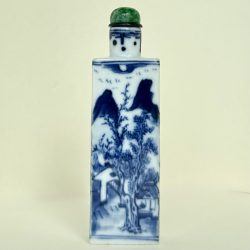
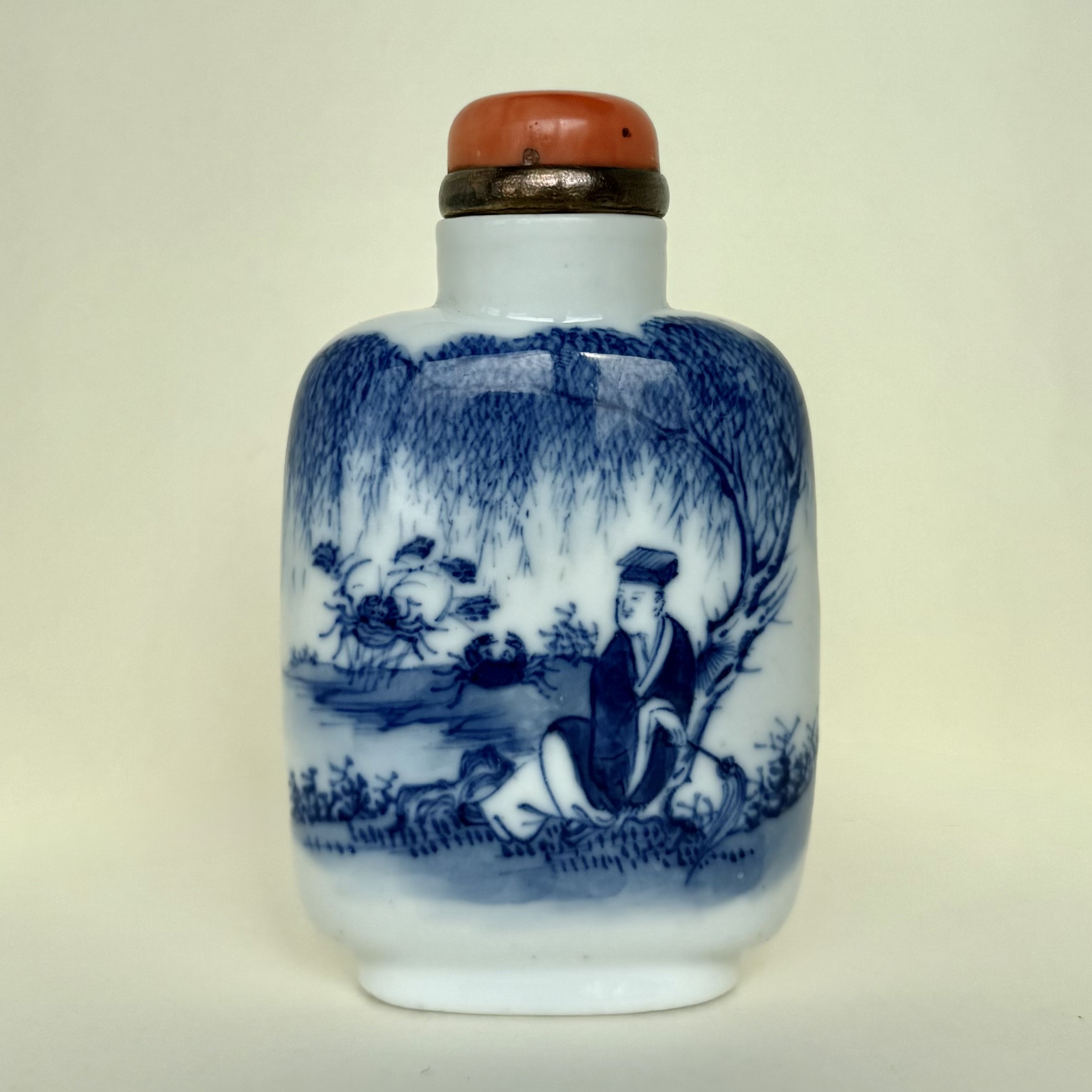
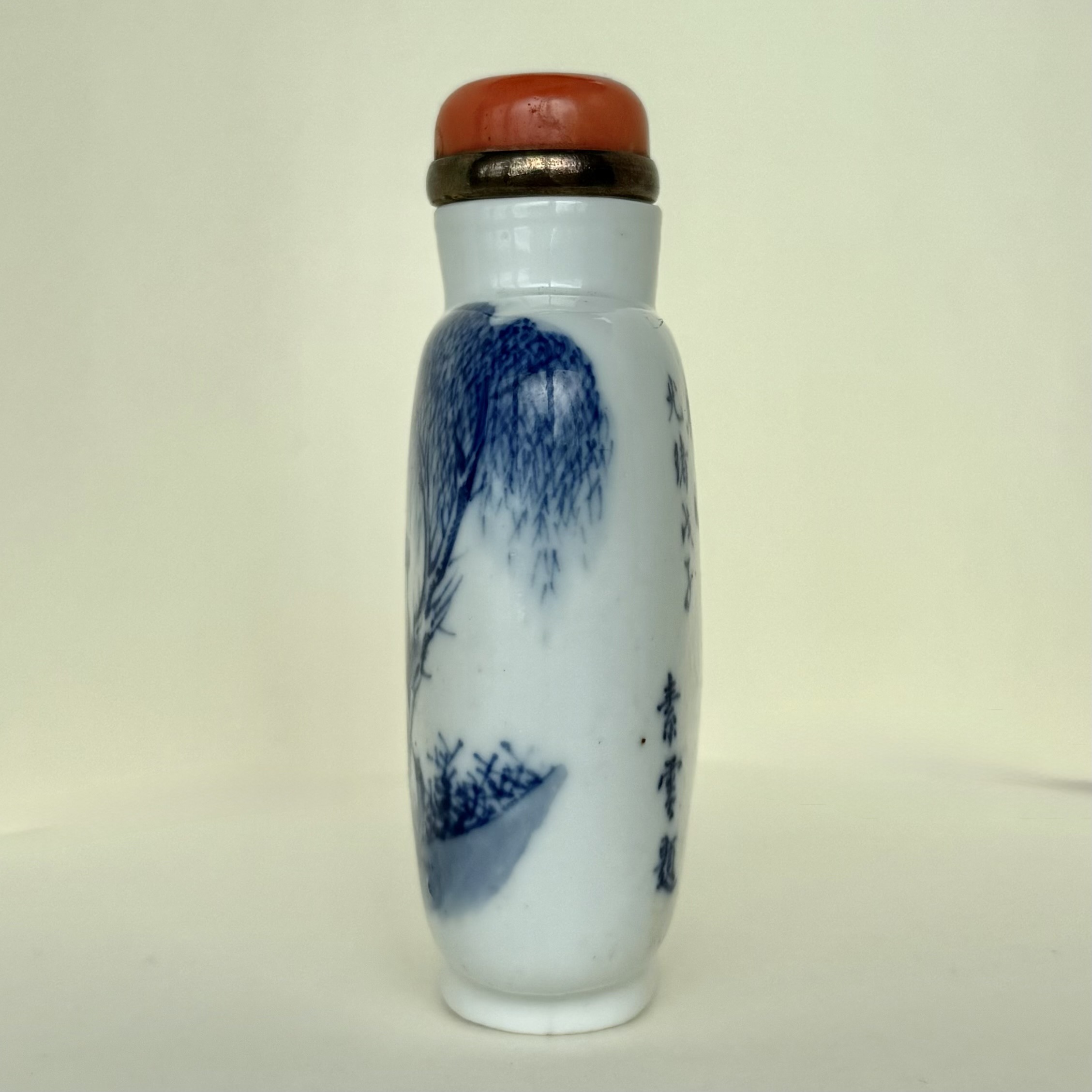
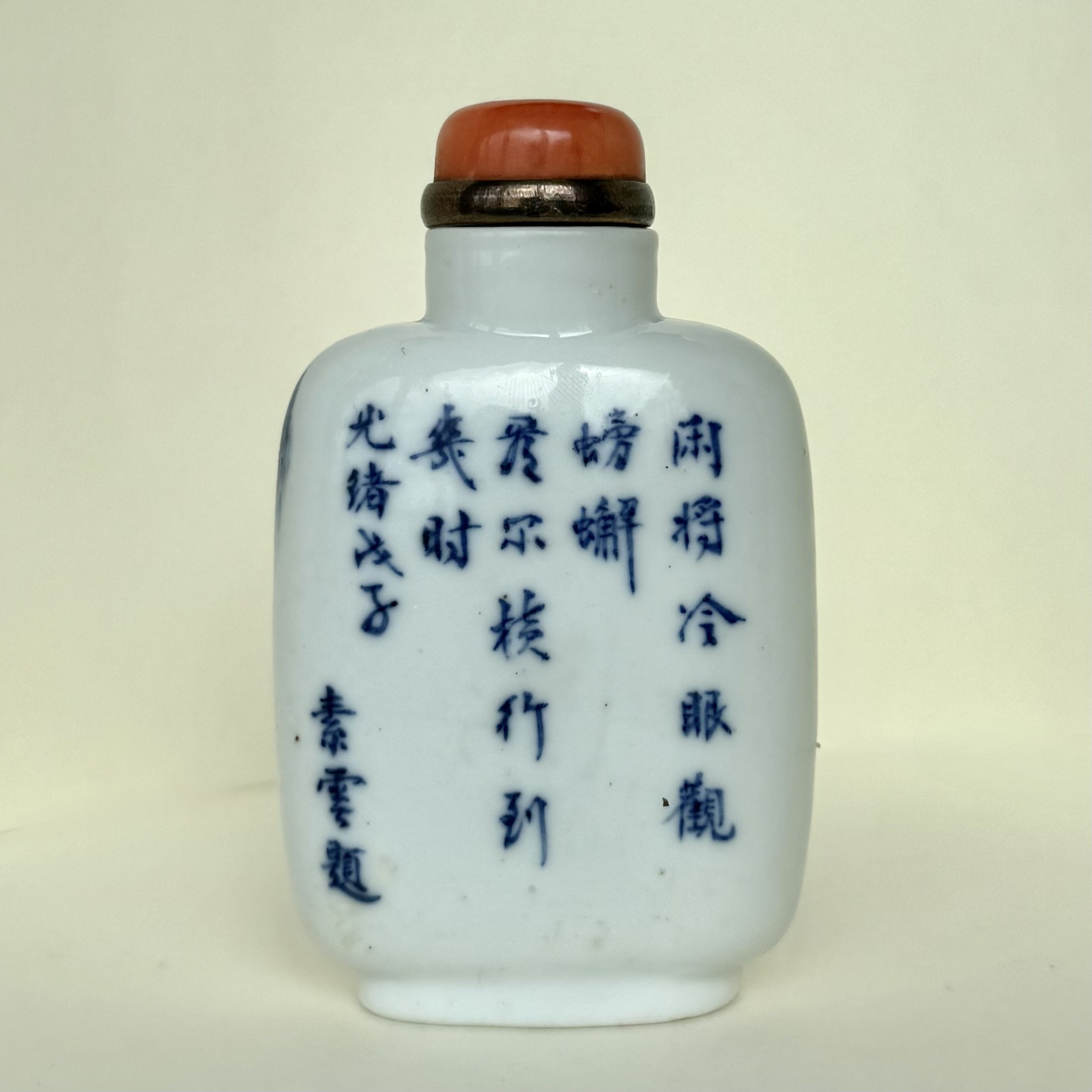
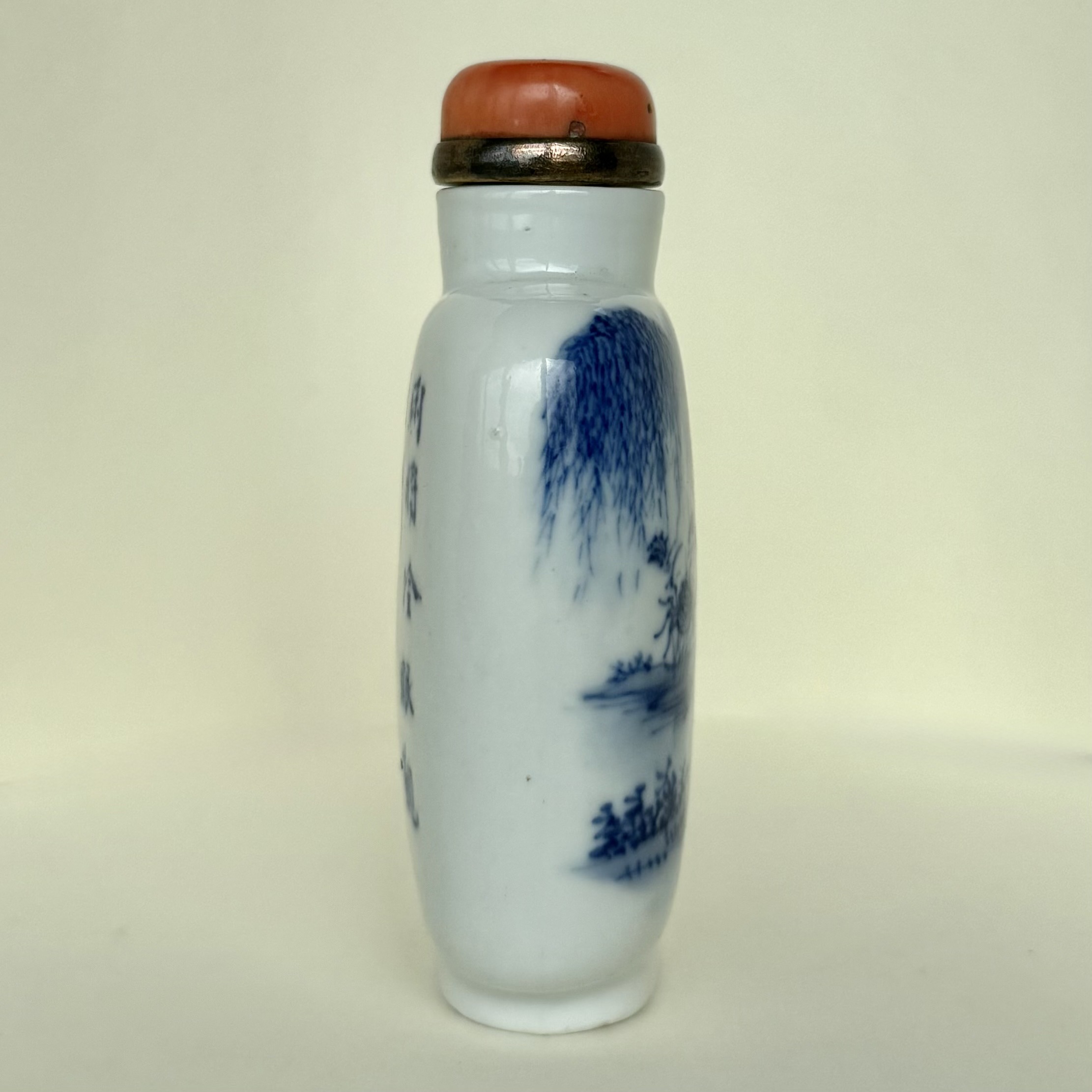
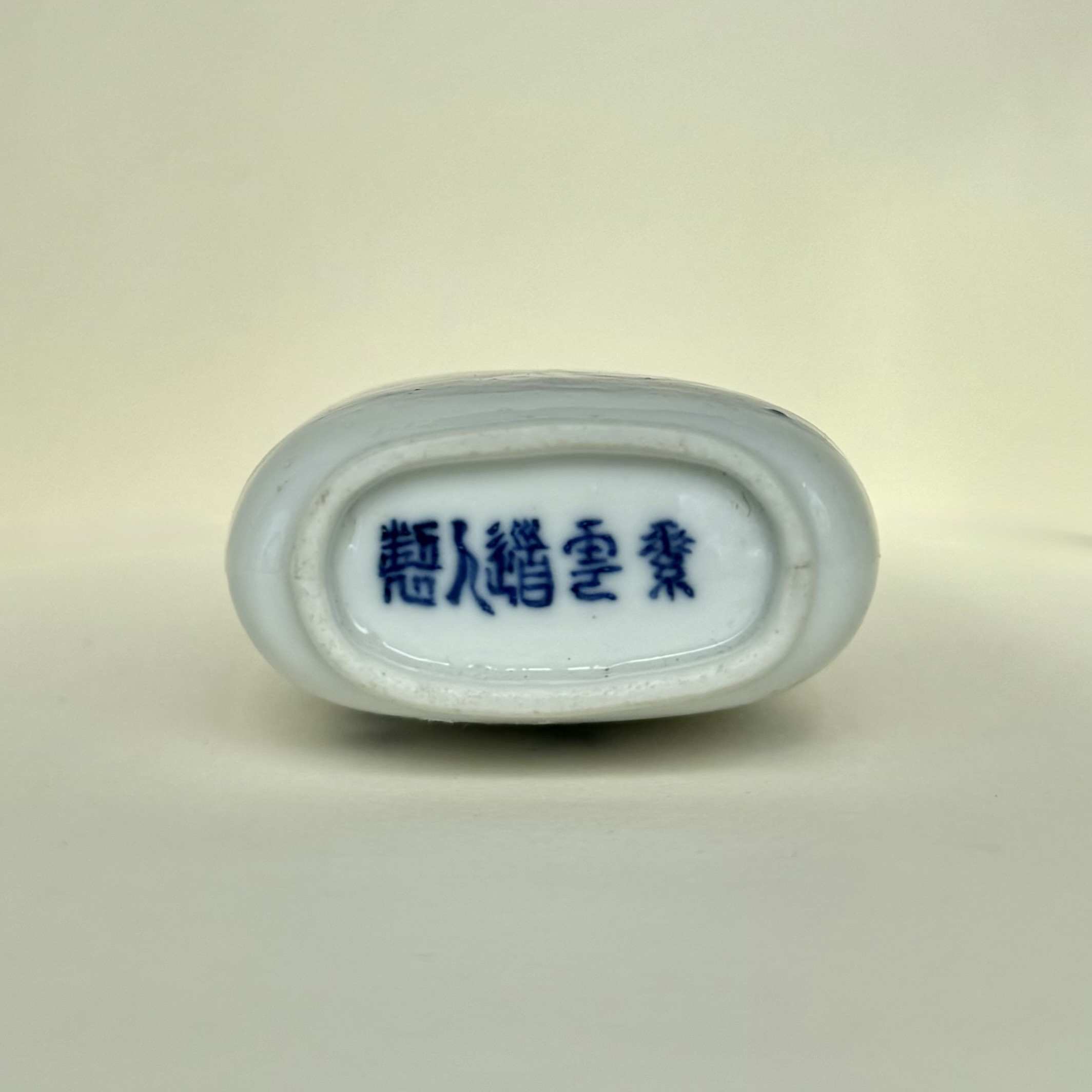
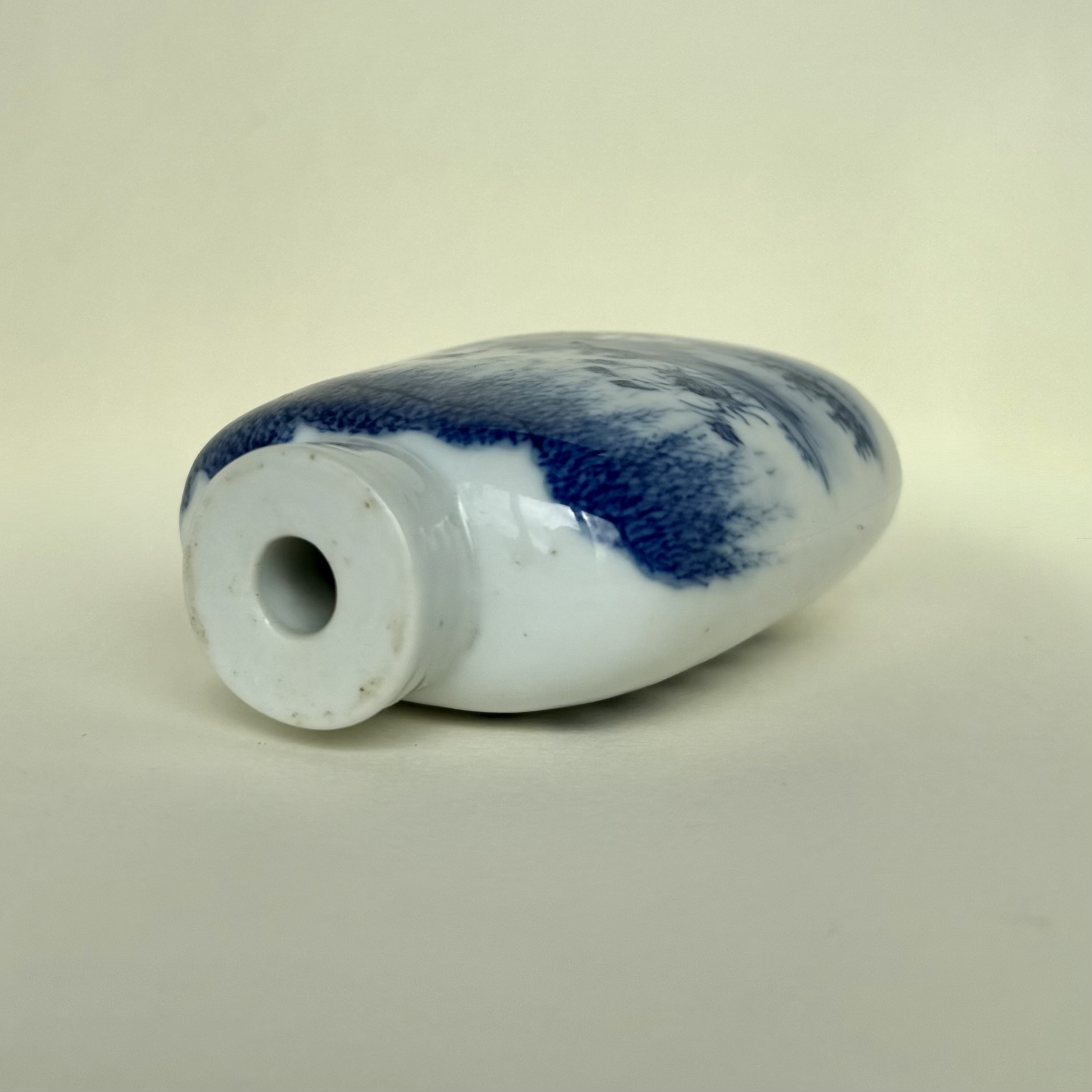
Porcelain, of squared form with sloping shoulder, painted in underglaze blue with a scholar seated holding a fly whisk under a willow tree, with a spider and a crab in the background, the reverse with an inscription and the base with a four-character mark.
閒將冷眼觀螃蟹,看爾橫行到幾時。 The inscription reads:
“Leisurely, I observe the crab with a cold eye; let us see how much longer you can carry on with your overbearing ways.”
光绪戌子 素雲题
Inscribed by Su Yun during the Xuzi year of the Guangxu reign (1888).
素雲道人题(base mark)
“Written by Su Yun Daoren”
Historical context
Su Yun Daoren (originally named Liu Duosheng 刘多生; dharma name Liu Chengyin 刘诚, also known as Liu Mingyin 刘明印) went by the Taoist name Su Yun Daoren and the alias Fuhezi 符合子. He was a prominent eunuch of the late Qing Dynasty.
He served as the Chief Eunuch in charge of the Imperial Seals for the Three Great Halls of the Forbidden City, earning him the nickname “Yin Liu”印刘 (Seal Liu). He was widely regarded as Empress Dowager Cixi’s favourite eunuch. In the 15th year of the Guangxu reign, he was appointed to manage the affairs of the Six Palaces. Notably, he was the mentor of the famous head eunuch Li Lianying李莲英. This could be an imperial palace piece commissioned under his supervision during that era.
A note on the quote
The poem is a classic Chinese metaphor. The crab represents someone who is arrogant or tyrannical (because crabs walk “sideways” or “crossways,” which in Chinese culture symbolises “acting against the grain” or “behaving lawlessly”). Su Yun is essentially saying he is patiently waiting for an arrogant person’s inevitable downfall.
Jingdezhen, 1890-1900.
7.5cm